Just as club culture is diverse, so too is the knowledge and experience each individual brings to the table regarding anti-discrimination, diversity, and equality. This glossary explains a wide range of terms. You certainly don’t need to know or learn all of them to engage with these topics. Rather, the glossary serves as a resource for self-directed learning and is a reference guide that can continue to grow over time.
To make the terms and their definitions easier to understand, we occasionally provide examples from club culture that perpetuate discriminatory scenarios and structures. This may trigger negative reactions in some people. Please be mindful if this is the case for you.
The term “ableism” is derived from the English word for “ability” and originated in the U.S. disability rights movement. It refers to the evaluation of people with disabilities based on their (attributed) physical and mental abilities. This involves reducing a person solely to their disability. Such evaluation can take the form of negative devaluation or, ostensibly, positive valorization. This evaluation is based on the assumption that there is such a thing as a concept of a “normal” physical and mental state, against which a disability can be judged as a deviation.
If people with disabilities are treated unequally or disadvantaged as a result of this assessment, that is →discrimination.
The underscore is used to make it clear in language that people are not "disabled," but rather are made so by external circumstances, buildings, and structures.
Accountability refers to the (collective) assumption of responsibility. It is not only the perpetrator who must confront the act of violence; the→community, individuals, and the environment in which the act occurred also bear responsibility. The term was coined by a U.S.-based network of feminists of color. It encompasses four areas: safety and self-determination for the affected person; responsibility and transformation on the part of the perpetrator; changes in the immediate environment; and changes at the political and societal levels. Community accountability is directed against the punitive state, against criminal justice feminism, and against left-wing sanctions.
The abbreviations AFAB and AMAB stand for “assigned female at birth” and “assigned male at birth.” At birth, doctors determine a baby’s →gender of the person based on their external genitalia. Children with a penis are recorded as male on the birth certificate, and children with a vulva as female. This forms the basis of gender identities for many people. The terms AMAB and AFAB are used to indicate that people are not born as women or men, but rather that their gender is assigned at birth.
However, these abbreviations are also problematic because they still refer to the physical characteristics of the sex assigned at birth and are therefore also exclusionary toward →intersex individuals. They can be replaced with specific descriptions of a person, such as: menstruating individuals; individuals who produce sperm; individuals with facial hair; individuals with a deep/high voice; individuals with→dysphoriadue toa rounded chest.
"Agender" is a term that can literally be translated as "without gender." These individuals either do not identify with any gender, do not relate to the concept of gender, view themselves as gender-neutral, or have an indefinable gender that cannot be categorized as either binary or →non-binary.
The→AGG (General Equal Treatment Act)generally takes precedence over a venue’s right to admit or exclude guests. When entering a →club is considered a so-called “mass business” within the meaning of the AGG. Denying entry at the club door may constitute constitute →discrimination under the AGG or a legally permissible exercise of the club’s right to manage its premises. In this context, the right to manage the premises includes issues such as intoxication, aggressive behavior, inappropriate attire, body odor, and similar factors, as well as maintaining a balanced gender ratio and catering to specific profiles or customer groups (women-only nights, under-30 events, →LGBTQIA+ clubs)—in contrast to the AGG, which prohibits individual exclusion based on personal characteristics (gender, age, social status, sexual orientation, disability, religion/worldview, as well as exclusion of →BIPoC or through→racistdiscrimination.
All-gender-welcome restrooms are restrooms that people of all genders can use. Many people can benefit from these facilities, such as parents with children of different genders, people who are cared for by a caregiver of a different gender, and →trans, →intersex, and →non-binary individuals. We find non-gendered restrooms in many public places, such as on airplanes, on trains, and even in many clubs and bars. Using the restroom is a need shared by all people. No one should have to fear strange looks, or even the risk of being verbally or physically attacked or being barred from using the restroom. All-gender restrooms are safer for trans, intersex, and non-binary people than gender-segregated restrooms.
The term "ally" comes from English and literally means "ally." It refers to people who →privileges to support with marginalized groups. In other words, they ally themselves with a group facing discrimination, even though they themselves are not affected. The term is particularly well-known in the →LGBTQIA+ community and through the →Black Lives Matter movement. For example, an ally of the LGBTQIA+ community uses their more privileged position as a heteronormative and cisgender individual to help other gender identities gain recognition in society. The goal is to actively support marginalized groups and go beyond merely talking about →oppression is wrong is not enough. In a club context, allyship means, for example, when a white person cancels a performance because there are no →BIPoC are represented in the lineup.
The non-binding working definition adopted by the International Holocaust Remembrance Alliance (IHRA) in 2016 reads: “Anti-Semitism is a certain perception of Jews, which may be expressed as hatred toward Jews. Anti-Semitism is directed in word or deed against Jewish or non-Jewish individuals and/or their property, as well as against Jewish community institutions or religious institutions.” The German government has also adopted the following addition: “Furthermore, the State of Israel, understood as a Jewish collective, may also be the target of such attacks.”
To guide the IHRA in its work,the following examplesmay serve as illustrations: Manifestations of antisemitism may also be directed against the State of Israel, which is understood as a Jewish collective. However, criticism of Israel that is comparable to that directed at other countries cannot be considered antisemitic. Anti-Semitism often involves the accusation that Jews are engaged in a conspiracy against humanity and are responsible for “things not going right.” Anti-Semitism manifests itself in speech, writing, and imagery, as well as in other forms of action; it employs harmful stereotypes and attributes negative character traits. Anti-Semitism is a form of→racism, but it differs in that Jews are not only viewed as “inferior” like Black, Indigenous, and People of Color (BIPoC), but are also burdened with stereotypes of being “rich,” “greedy,” “powerful,” “elitist,” or inherently “malicious.”
In April 2021, the non-binding“Jerusalem Declaration on Antisemitism” (JDA)was publishedasa potential alternative to the IHRA definition or as a tool to aid in its interpretation: “Antisemitism is discrimination, prejudice, hostility, or violence against Jews as Jews (or Jewish institutions as Jewish).” In conjunction with a set of15 guidelinesfor its use, the JDA’s core definition is intended to serve as a new proposal for refining the definition of antisemitism.
Age discrimination refers to the unfair treatment of individuals or groups based on their age. Ageism and adultism are forms of age discrimination.
Ageism refers to →discrimination against younger children or adolescents due to an existing power imbalance between children, adolescents, and adults. Adultism focuses on a socially accepted dominance over children that is taken for granted and rarely questioned.
Ageism is a term that refers to the negative treatment of people based on their advanced age. For older adults, social and economic disadvantages in particular make it more difficult for them to participate in the workforce and in society.
In a club setting, for example, people may be turned away at the door simply because they are perceived as being either too old or too young/immature based solely on their appearance. Neither a person’s perceived age nor their actual age says anything about their character, maturity, or life experience.
Awareness refers to the recognition and attention given to situations in which others’ boundaries are being or have been crossed. All forms of →discrimination and →(sexualized) violence can play a role here, but it is also about sensitivity to a person’s well-being.
Awareness-raising efforts aim to ensure that everyone, regardless of gender, sexual orientation, skin color, background, appearance, or physical abilities, can feel as comfortable, free, and safe as possible. Situations that cross boundaries and →(sexual) violence should be prevented in advance by raising awareness of structures and reflecting on them. If such incidents do occur, there are trained staff members whom affected individuals can contact to receive counseling, support, and assistance if necessary.
Accessibility means that all areas of daily life are equally accessible to everyone without the need for assistance from others. This includes, for example, buildings, public spaces, homes, workplaces, transportation, services, and access to information. In practical terms, this means that ramps, elevators, sign language interpreters, and information in plain language are available. Absolute accessibility is rarely possible in all areas of life, which is why the term “low-barrier” is often more accurate.
Restriction means a limitation on the full enjoyment of human rights in practice. Restriction is the opposite of→equal opportunity.
Complaint management is generally defined as the systematic handling of customer complaints and claims. In a club context, it refers to a defined, systematic process for a →club in dealing with cases of →discrimination, inappropriate behavior, or complaints reported by guests. This procedure addresses the following questions: Where can the incident be reported? How and by whom is it handled during and after the event? How are those affected supported during and after the event? How are incidents documented and evaluated? What measures are taken to minimize or prevent similar incidents in the future?
Every club, open-air event, or festival is free to decide whether to develop and implement a complaints management system. However, such a standardized process can improve the ability to handle guests affected by discrimination responsibly and help prevent inappropriate behavior and assaults.
Advocacy by those directly affected champions their interests and is largely shaped and guided by them. As “experts in their own affairs,” their expertise is indispensable and must always be taken into account when non-affected parties make decisions regarding discrimination, in keeping with the principle “nothing about us without us.”
The binary (Western) gender system assumes that there are only two genders: male and female. It does not recognize any other genders or intermediate categories.
This applies to every aspect of society, such as gender-based social roles, gender identities, and people’s physical sex characteristics.
This system ignores the existence of →intersex, →non-binary and other people who do not fit into this system. The binary gender system is constantly reinforced in everyday life through behaviors, norms, and rules. In cases of doubt, it is also enforced violently. For example, intersex people are subjected to unnecessary medical interventions so that they conform to a binary gender image. Clubs, however, offer a space to explore and experiment with different gender identities. However, people in →clubs also encounter a binary gender order: for example, during bag checks, people who are perceived as female are usually assigned to a security person who is also perceived as female. Of course, this has its justification. However, a person’s gender identity cannot be determined based on outward appearances. To avoid misgendering , security personnel should ask the guest who they would like to perform the bag check.
Black, Indigenous, and People of Color—abbreviated as BIPoC—is a self-identification used by and for people who have experienced racism. The term signifies a political and social stance and is understood as emancipatory and →solidarity. It stands against attempts to divide people through →racism and culturalization, as well as against discriminatory labels imposed by the white majority society. Black, Indigenous, and People of Color each have distinct experiences of discrimination and are therefore identified separately. When referring to a specific subgroup within this category, only those being discussed should be named. The term PoC includes all people who are singled out and subjected to →racist and/or →intersectionally discriminated against. For →queer, →trans and →inter Black, Indigenous, and People of Color, the abbreviation QTIBIPoC is used.
Black Lives Matter is a movement that originated in the United States and advocates against violence against Black, Indigenous, and People of Color (→BIPoC). Black Lives Matter regularly organizes protests against the killing of BIPoC by police officers and on other issues such as →racial profiling, →police violence and →racism. The movement began in 2013 with the use of the hashtag #BlackLivesMatter on social media and has since spread widely beyond the United States.
A club is a venue that hosts musical performances within the context of a particular scene, and where people gather to dance, listen to music, and socialize in a safe environment.
Equal opportunity means being able to fully enjoy human rights in practice without restriction. In the event of a restriction on human rights, this is referred to as →restriction.
"Cis" is a Latin prefix meaning "on this side." It refers to a person who lives in accordance with the gender assigned to them at birth. For example, a cis woman was assigned female at birth and identifies as a woman. Being cisgender corresponds to a social norm. This means that in our →heteronormative society, it is assumed that all people are cisgender. This assumption can lead to →transphobia/cissexism .
Club culture refers to a phenomenon in which people gather at events held in safe spaces to dance, produce, perform, and enjoy music, as well as to socialize.
A community is a group of people who share something in common. A community can be defined by the shared characteristics of the people within it and/or by the strength of interpersonal bonds and a sense of belonging. A community can exist for any shared interests, and smaller sub-communities can also emerge within communities. For example, the→LGBTQIA+communityhas many smaller communities that often arose due to hostility and “-isms.” New York’s ballroom culture emerged because →QTIBIPoC in →dragshows.
“The diversity approach examines social power relations in their →intersectionality, which manifests itself through norms, →discrimination and →privilege in connection with ascribed categories such as “skin color,” origin, immigration status, religion, →gender, sexual orientation, disability, age, and social background or social status. Diversity therefore means not only variety or versatility, but also a critique of discrimination, a critique of power and norms, →empowerment and power-sharing, as well as an intersectional perspective.”
The term "DJ" comes from English and stands for "disc jockey." A disc jockey is someone who plays a curated selection of music stored on various media (CDs, vinyl records, USB drives, SD cards) for an audience; this activity is generally referred to as "DJing."
Since “disc jockey” is a gender-neutral term, the term “DJane,” which is sometimes used, doesn’t make sense. The verb “to jane” doesn’t exist. “To jockey” means to maneuver. You maneuver the record to the right spot or the right speed in order to mix it—there’s no need to add a gender here.
“If we already have a gender-neutral term, we shouldn’t ruin it by making it gender-specific. As a self-identification, of course, that’s a completely different matter—everyone can decide that for themselves, but not for everyone else.”
You can read more about the term "DJane" here:
Drugs obtained illegally have unknown compositions and concentrations. This poses enormous risks to users. Drug testing involves analyzing these substances to determine their ingredients. An integral part of drug testing is always the counseling provided along with the test results, which covers the effects and risks of the substance as well as health-promoting recommendations regarding its use.
There are various technical methods available for analyzing substances. Some methods can only rule out certain ingredients, while others identify the ingredients present. Other methods even allow for quantitative determination, i.e., the quantification of the substances present. Many European countries now have government-funded drug-checking projects implemented by drug support organizations. The Berlin Senate also supports such a project.
Dark rooms emerged in American gay culture during the 1970s. They are dimly lit or completely dark rooms in bars, →clubs or saunas and are used for sexual activity.→Safe sex(mandatory condom use) and→consentareof the utmost importance.
People have different emotional and physical boundaries. The concept of the power to define presupposes that →(sexual) violence is anything that a person affected defines or identifies as such. What constitutes →discrimination or boundary violations is determined by the affected person. The focus is on the affected persons, not on the person who discriminates or commits violence. What should happen after a boundary violation or discrimination should be guided by the wishes and needs of the affected person. The concept serves to create a →safer spaces and is active →solidarity.
Fatphobia stems from the assumption that people who are overweight are physically, intellectually, morally, and health-wise inferior. There is a belief that health can be controlled if people go on a diet or eat in a certain way, and that one can control how long one will live (diet culture). Overweight people usually have no control over their weight. In many cases, being overweight is not their own fault, but the result of a congenital condition.
Discrimination means that “people are systematically prevented from exercising their human rights on the basis of individual or group-specific characteristics.” International law identifies three main characteristics of discrimination: unfavorable treatment based on an unlawful ground and lacking an appropriate and objective justification.
The definition of discrimination under the →General Equal Treatment Act is based on the effect, not the motive. To determine whether discrimination has occurred, it does not matter whether the treatment stemmed from a hostile or derogatory attitude or whether the disadvantage was simply the unintended consequence of a particular rule. In practice, discrimination can take various forms:
- Distinction – for example, →BIPoC are systematically targeted by police checks.
- Exclusion – for example, when people are turned away at club doors because of who they are.
- Restriction – for example, if →LGBTQIA+ are denied the freedom of assembly.
- Preferential treatment – for example, when nationals are given priority in the allocation of housing.
- Separation – for example, →Rom:nja children are systematically taught in separate schools or classes without taking their abilities and needs into account.
- Failure to provide reasonable accommodations—for example, when buildings are not wheelchair accessible.
Diversity-focused organizational development is a strategy for institutions that do not adequately reflect societal diversity. The goal is to →increase equal opportunity for all members of the organization and to reduce (structural) →discrimination . Diversity-oriented organizational development responds to the growing need and necessity to embed diversity as a cross-cutting issue within institutions. It combines approaches from anti-discrimination work with approaches from organizational development.
Source: https://diversity-arts-culture.berlin/woerterbuch/diversitaetsorientierte-organisationsentwicklung
The term "drag" originated in the American gay community. The exact origin of the term is unclear. However, it is believed that "drag" is an abbreviation for "Dressed Resembling A Girl/Guy." In the past, it was mostly cisgender gay men who performed as drag queens. Today, however, →cis women and men, →trans women/men, and →non-binary people as drag artists. Therefore, the →binary distinction between drag queen and drag king is no longer made; instead, the terms drag artists and performers are used. Drag is generally about playing with gender roles and norms, parodying them, and thereby →power structures . Drag not only reveals the performative nature of gender but is also a prime example of the cultural construction of →gender. Drag performance aims to destabilize the “truth” of gender identity through repetition.
Since late 2018, →intersex people have been able to have the third gender option “diverse” entered on their ID cards. The third option, “diverse,” is an addition to “male” and “female.” However, so far this has been determined solely on the basis of physical sex characteristics. Only those with a so-called “variation in sex development”—that is, physical sex characteristics that do not clearly correspond to the medical categories “male” or “female”—can claim the “diverse” option for themselves. Therefore, the law has so far been exclusive to →trans and →non-binary people. However, people who do not currently meet the criteria for the third option can apply for a so-called →supplementary ID card.
Drug literacy refers to the ability to assess the pleasures and risks of drug use based on facts and to make responsible decisions accordingly. Drug-literate users are able to choose pleasure-oriented and risk-minimized consumption habits as an alternative to uncontrolled use and total abstinence.
Dysphoria refers to a state of emotional discomfort or a mood characterized by anxiety, depression, sadness, and irritability. An example of dysphoria is gender dysphoria. This dysphoria is an extreme sense of unease caused by a discrepancy between the sex assigned to a person at birth (→AMAB/AFAB) and the gender with which they identify (affirmed gender). People with gender dysphoria feel uncomfortable because they feel “trapped” in a body that does not match the gender that feels right to them.
The acronym stands for women, →intersex, →non-binary, →trans, and →agenderpeople. This term refers to all people who, within →patriarchy . There is also the abbreviation FLINTA*, but we decided against using it here, as the abbreviation is not about sexual orientation but gender identities. In feminist circles, the spellings “women*” (women with an asterisk) or “womxn” are frequently used. However, these spellings are the subject of critical debate. For one thing, they can give the impression that trans women are not “normal” women and are therefore →transphobic . On the other hand, non-binary, agender, and intersex people may also feel excluded and not addressed by this spelling. An →inclusive approach is to clearly name the identities in question.
If a person’s masculinity is fragile, it means they feel insecure about their masculinity. This usually comes to light when men seek something more masculine or deny something they perceive as not (enough) masculine.
Fragile masculinity refers to the particular anxiety felt by men who believe they fall short of cultural standards of masculinity. Fragile masculinity can motivate compensatory attitudes and behaviors intended to restore their threatened status as a “real” man.
Example: A man doesn't want to wear tight jeans or use a pink razor because he's afraid people won't see him as manly enough anymore.
Feminism emerged in a society characterized by →cis men, in which women had fewer rights than men, either legally or, in most cases, in practice. Feminism aims to →oppression and structural disadvantages based on gender and thereby achieve equality. It advocates for all those who are →patriarchyand is not only an individual experience but also a structural one: for example, in Germany, women’s income is on average 21 percent lower than men’s for the same qualifications, and approximately 80 percent of people affected by violence are women.
Within feminism, there are different schools of thought, each of which may have different definitions and priorities regarding feminism: →intersectional, ecological, →queer, socialist, and deconstructivist feminism.
You can see what feminists are still fighting for today here.
In psychology, gaslighting refers to a form of psychological violence or abuse in which victims are deliberately disoriented, manipulated, and deeply unsettled, and their sense of reality and self-awareness is distorted or destroyed, leaving them unable to distinguish between truth and illusion. Gaslighting is an attack on one’s own reality and is also part of many forms of discrimination. Unlike gaslighting in relationships, it is not a single person repeatedly questioning another’s reality. In →racist or →sexist gaslighting, it is many people who react according to the same pattern. Thus, it is not the actions of the perpetrators that are called into question, but rather the recipients and their state (→perpetrator-victim reversal).
The term "gatekeeping" is used to describe people who are in a position to decide whether someone is granted access to, for example, resources, a→community, or →club or alcohol.
Gender refers to “social gender” and is contrasted with biological sex. Social gender describes the culturally constructed aspects of gender in humans—that is, traits that are typically considered feminine or masculine within a given culture. This insight can be traced back to the feminist writer Simone de Beauvoir. In her book *The Second Sex* (1949), she posited the thesis that one is not born a woman but is made into a woman over the course of one’s life, and that the supposed differences between women and men are not a product of nature but a product of society.
Gender neutrality is the idea that politics, language, and other social institutions should avoid distinguishing roles based on people’s sex or gender identity. This is done to →discrimination . Gender neutrality can be promoted, for example, through→gender-inclusive languageas well asgender-neutral restrooms (→all-gender restrooms).
Gentrification refers to the socioeconomic transformation of urban neighborhoods resulting from an increase in their appeal to wealthier homeowners and renters than before, and their subsequent move-in. This is accompanied by the displacement of entire population groups and a reduction in social diversity.
In German, forms of address and titles are often used only in the masculine form or in the generic masculine. To ensure that →FINTA* feel included, they should also be explicitly named and made visible. By addressing and naming people of all genders, stereotypical gender roles are dismantled. It is possible to use gender-neutral language (example: technician -> technical specialist; companion -> accompanying person) or to make them visible using the gender star, the gender gap, or the gender colon. On our website, we have opted for the gender colon, as it includes people who identify as neither female nor male. This option currently offers the highest level of accessibility and facilitates reading flow.
Here is a gender-inclusive or gender-neutral dictionary.
Weight discrimination refers to discrimination based on physical appearance, as well as the fear and hatred directed toward people perceived as being too fat or too thin. People whose weight deviates above or below what is defined as normal (keyword: BMI, Body Mass Index) are particularly subject to discrimination and stigmatization. Consequences of weight discrimination include unemployment, lower pay, poor working conditions, violent insults, or even being turned away at the door of a club.
Equal treatment is the positive counterpart to preferential treatment (→privileging) and disadvantage (→discrimination). The term means that no person is favored or disadvantaged on the basis of their skin color, origin, birth, religion, language, gender, sexual identity, or physical ability.
Homonormativity stems from the assumption that there are only two genders. In doing so, gay and lesbian individuals reproduce traditional notions of masculinity and femininity and, in their political activities, primarily strive for the ideals of heterosexual lifestyles (marriage, children, home ownership, monogamy) rather than politically challenging and questioning prevailing social norms and institutions. While the legalization of same-sex marriage was celebrated, it →privileged lifestyle →heteronormative institutions. Homonormativity results in other →queer identities, such as →non-binary and →trans people, are excluded.
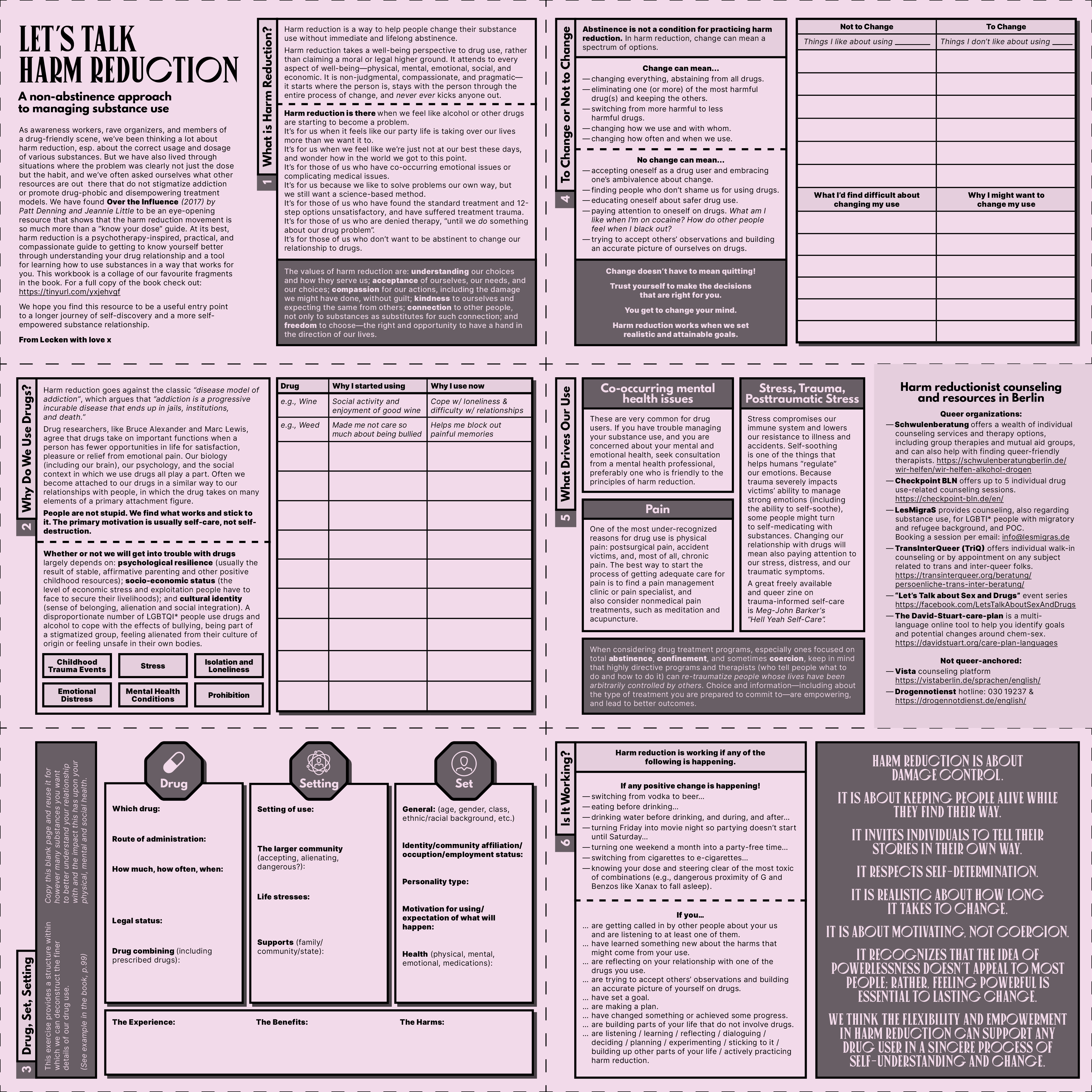
Harm reduction refers to measures, programs, and practices aimed at reducing the negative health, social, and economic consequences of drug use, without necessarily seeking to reduce drug use itself. Harm reduction is grounded in justice and human rights. It focuses on positive change and on working with people without judging, coercing, or discriminating against them, or requiring them to stop using drugs as a precondition for receiving support. It is accepted that people make conscious decisions for or against substance use. Harm reduction pays particular attention to the conditions that support the target group in reducing or avoiding harm and in taking advantage of health promotion services. Harm reduction views people who use substances as self-determined and intelligent individuals and acknowledges the connection that every person has to a substance. It promotes knowledge and strengthens the capacity for action among people who use substances with the goal of minimizing risk. It rejects the stigmatization of any substance and the shaming of users. Harm reduction also includes the component of social justice with the goal of changing drug policy and opposing the (racist, imperialist) war on drugs. Harm reduction measures include, for example, safer use counseling/information booths/materials, drug consumption rooms, awareness teams, drug checking, and needle exchange programs and vending machines.
MORE:
https://www.hri.global/what-is-harm-reduction
When people are disparaged, attacked, or when others are incited to hatred or violence against them, this is referred to as hate speech. Often, these are →racist, →anti-Semitic, →sexist, or →transphobic comments that target specific individuals or groups. Hate speech is thus an umbrella term for the phenomenon of group-focused hostility or incitement to hatred on the internet and social media platforms. The legal definition of the term exists in a gray area that encompasses both punishable and non-punishable forms of expression.
Heteronormativity stems from a →binary gender system and the assumption that all people identify as either →cis women or cis men, and that all cis men are sexually attracted only to cis women—and vice versa. Heteronormativity also involves the assumption that women and men possess certain inherent traits, behaviors, tastes, and preferences, and that they adhere to these patterns. In other words, it is a socially constructed “norm” that designates only heterosexuality as the standard. All other ways of life, such as homosexuality, are thus considered deviant or exceptional. Other gender identities are ignored within this binary framework. We encounter heteronormativity everywhere: for example, on television, in children’s books, in advertising, and in laws.
Heterosexism is the belief that heterosexuality is the only natural and superior form of sexuality. Sexual orientations such as homosexuality, bisexuality, asexuality, and pansexuality are viewed as “abnormal” and rejected. This disparagement sometimes also extends to people whose gender identity does not align with the sex assigned to them at birth (→trans and →non-binary people).
Homophobia refers to discrimination against gay and lesbian people. It manifests itself, for example, through rejection, anger, intolerance, prejudice, discomfort, or physical or psychological violence toward gay and lesbian people or those perceived as gay or lesbian. →Internalized homophobia describes a situation in which homophobia is directed against one’s own sexual orientation and thus against oneself. This often occurs in a homophobic environment and/or before one’s own internal coming out.
We prefer the term “homophobia,” since “homophobia” sounds as though discriminating against gay people is not a conscious choice. A phobia, on the other hand, is a diagnosis that is very difficult to address.
Experiences of discrimination stemming from social power dynamics are referred to as “internalized →oppression.” Internalization occurs when the negative beliefs about an identity group are taken on as one’s own, as if they were real.
- Internalized →racism: When white people’s approval is sought for work that is better than that of others →BIPoC, this constitutes internalized racism.
- Internalized →Classism: When a poor child imitates the clothing, mannerisms, attitudes, and ambitions of rich children because it is unacceptable to be poor, that is internalized classism.
- Internalized →Transphobia: When →trans people think that they are not a real man or woman, that is internalized transphobia.
Intersectionality refers to the interplay of categories of discrimination such as gender, ethnic origin, class, sexual orientation, disability, and many others. It is not merely a matter of adding these categories together, but rather of understanding the specific impacts that this multiple discrimination has on individuals and structures.
For example, a woman who belongs to an ethnic group may be subject to →discrimination than a man from the same marginalized group. In addition, other personal characteristics or circumstances, such as a disability or educational level, influence an individual’s vulnerability to becoming a victim of discrimination. The combination of different grounds for discrimination is also referred to as intersectional discrimination.
Identity politics refers to a framework for political action that focuses on the needs of a specific group of people. The goal is to achieve greater recognition for the group and to reduce (structural) →discrimination, the improvement of their social standing, and the strengthening of their influence. Cultural, ethnic, social, or sexual characteristics are used to identify the members of such a group.
Inclusion means that every person is naturally part of society, is accepted, and can participate on their own terms—regardless of “skin color,” language, perceived ethnic origin, immigration status, religion, →gender, sexual orientation, disability, age, and social background or social status. An inclusive society explicitly views diversity as an asset—it is normal to be different.
People are described as intersex when a clear gender cannot be assigned to them at birth. The congenital physical characteristics that do not fit the binary social norm of male and female can be genetic, hormonal, or anatomical in nature. Intersex status is not a disease and generally does not impair health. Inter* organizations criticize the fact that intersex people continue to be subjected to surgery or medical treatment—often as infants or children—without their consent, in order to make their gender “clear.” International human rights organizations view this as a violation of the right to bodily integrity and sexual self-determination.
Classism refers to →discrimination based on social background and/or social and economic status. Classism is therefore not only about how much money a person has at their disposal, but also about their status and the financial and social circumstances in which they grew up. Classism targets people from the working class or those living in poverty, such as low-income, unemployed, or homeless individuals, as well as working-class children. The term has been significantly shaped by the experiences of communities facing multiple forms of discrimination. The consequence of classism is often →precarization. The high admission prices for events in clubs, bars, or at festivals are an example of classism. As a result, participating in club culture has become →privilege .
Consent distinguishes, among other things, between sex and →sexual violence. In this context, consent means that all participants in a sexual act have freely chosen to engage in it and can stop at any time. A prerequisite for consent is that all participants are capable of giving consent. This is not the case, for example, with unconscious or sleeping people, and can be impaired by factors such as dependency relationships, alcohol, and other drugs, etc.
The term "cultural appropriation" refers to the adaptation of an element of a culture—one that is typically systematically oppressed—by individuals from a different, usually dominant, culture or identity. The ethical dimension of cultural appropriation is particularly the subject of controversial debate when the appropriated culture belongs to a minority that is socially, politically, economically, or militarily disadvantaged. Marginalized groups, such as BIPoC, are still treated unfairly because of their appearance or cultural traditions. At the same time, dominant social groups, predominantly white, enrich themselves through these very symbols of foreign cultures—in part because they do not have to fear discrimination and can always discard the appropriation.
Festivals, for example, are often venues for cultural appropriation: many attendees incorporate visual elements from various cultures into outfits designed to be as eye-catching as possible. For example, festival-goers decorate their clothes with feather headdresses from the indigenous peoples of North America, paint bindis on their foreheads—which represent wisdom and spirituality in South Asia—or dress in dashikis from West Africa.
Critical masculinity focuses on bringing to light images of masculinity, expectations of masculinity, toxic behaviors exhibited by men, and the directly related →sexism. However, it is important to adopt a power-critical perspective that takes→feministissuesseriously, highlights male privilege, and avoids stereotypes. Critical masculinity also has the task of supporting alternative images of masculinity, reducing the relevance of masculinity requirements, and actively curbing sexist behavior by men.
The acronym stands for lesbian, gay, bisexual, →trans, →queer, →intersex , and asexual. The plus sign represents all other gender identities and sexual orientations and expresses →inclusion of these.
Lookism is →discrimination based on appearance. It is the assumption that appearance is an indicator of a person’s worth. It refers to the social construction of beauty or body standards and the oppression caused by stereotypes and generalizations about people who conform to these standards and those who do not.
The term refers to the behavior of men who sit with their legs spread apart in public places. But it is also common in clubs, especially →cis people who are perceived as male generally take up a lot of space, especially when dancing, at the bar, and in social interactions.
Marginalization is a social process in which certain groups are pushed to the “margins of society” and, as a result, are able to participate only minimally in economic, cultural, and political life. Marginalization is one of five factors that together characterize “social oppression”—along with injustice, violence, cultural imperialism, and powerlessness.
Power is the ability to make decisions for others, to subordinate people to one’s own opinions and views, and to achieve one’s own goals despite resistance from others. It thus gives rise to structures that lead to unequal power dynamics and forms of oppression and exploitation. Whether a person experiences racism is therefore linked to their own social position and the underlying power structures. What is needed is a redistribution of power in favor of the disadvantaged and an end to the abuse of power.
Mansplaining is a phenomenon in which a man explains something to a →FINTA* against her will and/or in a know-it-all and condescending manner. The man generally assumes that he knows more about the subject than the FINTA* person, which of course may not necessarily be the case. Regardless, he is usually not interested in what the other person knows about the topic, so it is not an exchange of knowledge. The phenomenon therefore illustrates →patriarchal power dynamics within communication.
Mental health encompasses our emotional, psychological, and social well-being. It influences how we think, feel, and act. It also plays a role in how we cope with stress, interact with others, and make healthy decisions. The structural conditions in which people live, or, for example, the extent to which they are affected by oppression under prevailing conditions, have an impact on both mental health and →mental illness .
Mental illnesses are conditions that affect a person’s thoughts, feelings, mood, or behavior, such as depression, anxiety, bipolar disorder, or schizophrenia. These conditions can occur occasionally or on a long-term (chronic) basis and can impair a person’s ability to interact with others and function in daily life.
Microaggressions are everyday remarks or actions that indirectly, subtly, or unintentionally →discriminate againstmarginalizedgroups. These remarks are usually perceived as offensive. Unlike some other forms of →discrimination , the person committing a microaggression may not even be aware that the behavior is harmful. Microaggressions are a form of everyday discrimination and can be explained using the metaphor of a mosquito bite: barely visible, tolerable individually, but when accumulated, the pain becomes unbearable. Microaggressions can take the form of attacks and insults, ignorance, unconscious actions, or the negation and dismissal of one’s own perspective and experiences.
Examples of microaggressions include:
- The person's comments are ignored. Sometimes they are also dismissed as irrelevant or unimportant.
- The person's name is consistently mispronounced. In the worst-case scenario, they are labeled as non-German, and this is used to justify the difficulty in pronouncing their name.
- tell a thin person to eat more
- Deliberately addressing people using the wrong→pronoun
Misgendering means assigning a person to the wrong gender and/or referring to them using the wrong →pronouns . This can sometimes happen unintentionally. However, it can also be intentional, e.g., as a form of devaluation or rejection. Misgendering primarily affects→transand→non-binarypeople and can →dysphoria .
Misogyny (from the Greek μĩσος misos, “hatred,” and gyne, “woman”) or hostility toward women is an abstract umbrella term for sociocultural patterns of belief that assign lesser relevance or value to women or greater relevance or value to men. It is internalized by both men and women themselves through psychosocial development (socialization, habituation) and constitutes the foundation for the hierarchical gender habitus of masculinity and femininity. It is thus the basis of hegemonic masculinity and→patriarchalrelationship structures.
Neurotypical people think, feel, and perceive things in ways that are considered “normal” by the general population. Neurodiverse people deviate from this norm.
Neurodiversity refers to neurological diversity. Autism, attention-deficit/hyperactivity disorder (ADHD), dyslexia, and learning disabilities are not disorders that need to be cured, but rather variations and differences that must be respected and viewed as natural human differences.
People who identify as non-binary do not see themselves as either male or female. The binary gender system does not apply to them and is rejected. Non-binary people can →trans or →cis or→inter. They canbefemale, male, both, neither, many, several, femme, or→agender, orsomething entirely different. They can be feminine, masculine, →queer , and political. They canusedifferent, new, or old, multiple, changing, or no→pronouns. They can have a wide variety of bodies, transition needs, or experiences—or none of the above. As a variation, the term enby [non-binary = nb = enby] is often used as a self-identifier.
Coming out means revealing a person’s gender identity and/or sexual orientation to another person, a group, and/or the public. This usually happens without the person’s consent or approval. In contrast, a person’s coming out is voluntary.
A panic attack is defined as a sudden, isolated episode of a physical and psychological alarm response that typically lasts only a few minutes and occurs without any objective external cause. The associated physical reactions are often perceived as life-threatening, which further intensifies the fear and panic. Symptoms include shortness of breath, a racing heart, sweating, trembling, dizziness, and anxious thoughts. Immediate self-help measures include breathing exercises, conscious muscle tension and relaxation, distraction, having simple conversations with others, and calling emergency services if necessary. Drugs can also be a→trigger forpanic attacks.
Passing refers to a situation in which a person’s social identity—such as gender, sexual orientation, ethnic background, religion, class, or physical/mental disability—is not recognized by others, and the person is therefore not subject to the social expectations associated with that identity. The person has the →privilege —also known as “passing privilege”—of “passing” or fitting in according to the respective norm. An example of passing is, for instance, when a Black person with very light skin is perceived as a white person, or when a person is accepted or perceived as a member of the gender with which they identify or which they present to the outside world. The concept of passing is often understood as a form of →oppression. Since people who pass are better protected from →discrimination, →hate speech, and acts of violence, passing actively contributes to the maintenance of social norms.
The term "patriarchy" refers to a social structure in which power and privileges are concentrated among men in hierarchical positions. When we speak of patriarchal structures within institutions, we mean that, above all, a large number of (white) cis men hold leadership positions and make decisions.
The English word "peer" means "of the same age" or "equal." When we talk about peers, we are referring to a group of people who share similar views or are of a similar age. A peer group is therefore a group with significant influence to which an individual feels a sense of belonging.
The term "police violence" is used in criminology and the media to describe physical and psychological violence perpetrated by police officers. The use of force is permitted by law only under certain conditions and then only to a reasonable extent. If the conditions are met and the appropriate degree of force is maintained, it is lawful; otherwise, it is unlawful. Those affected often include people with substance use disorders, homeless individuals, sex workers, BIPoC, and migrants, as well as protesters and journalists.
The Campaign for Victims of Racist Police Violence (KOP) is a political organization dedicated to documenting racist police assaults and supporting those affected. KOP was founded in 2002 by ReachOut, a counseling center for victims of racist, right-wing, and anti-Semitic violence, and other organizations. Its mission is to expose racist structures within the police force and to stand by victims of police violence. To this end, it informs victims and witnesses about their options for action and their rights. It refers people to counseling centers and offers financial support for legal proceedings through its legal aid fund.
Etymologically, “precarious” means “unsecure” or “not permanent.” The term “precarization” refers to the increasing insecurity of living conditions—especially in the realm of paid work. Those most affected are women, migrants, →BIPoC , and→LGBTQIA+individuals. People facing multiple forms of discrimination often find themselves in even more precarious living situations.
Privilege exists when individuals, by virtue of their group affiliations or ascribed identities (such as white, cisgender, male, and/or heterosexual), enjoy structural advantages and benefits that have not been earned through their own achievements or special qualifications. Conversely, these socially granted opportunities are denied to others or made more difficult for them to access. Privilege therefore always results in the disadvantage of others. Privileged individuals shape the norm and are often unaware of their privilege.
Just as we generally have names that we use, we also tend to have pronouns by which we want to be addressed. A personal pronoun is a pronoun that identifies participants in a conversational situation or refers to third parties. In German, the most commonly used pronouns are “he/she.” There is currently no legally recognized third-person pronoun in German, such as“they/them”in Englishor“hen” in Swedish. Alternative third-person, gender-neutral pronouns in German include “sier, xier, nin.” When you meet someone you don’t know, it’s important to ask for their pronouns in addition to their name: “What’s your name? Which pronouns do you use?” Even when talking about a person whose gender you don’t know, the neutral option is best. When talking about a person, you can also simply use “the person” or their name instead of the third-person gender-neutral pronoun.
Pinkwashing refers to marketing strategies designed to give the impression that a company, club, collective, or event identifies with the LGBTIQA+ community and advocates for its rights and goals. Critics argue, however, that such campaigns and this apparent solidarity are often merely superficial marketing tactics. Pinkwashing primarily serves to present the companies, clubs, collectives, or events in question as cosmopolitan and progressive, rather than actually actively supporting and protecting the queer community and queer individuals.
In English, the word “queer” long referred to something strange, unusual, or deviant and was used as a slur—much like the German word “pervers.” However, it has since become a positive term as people have begun to identify themselves that way.
Today, "queer" is an umbrella term for people who exist outside of gender and sexual norms; it also refers to a political stance that challenges the prevailing norms within the lesbian, gay, and bisexual community. Queer is based on the fundamental assumptions that identities are not fixed but fluid, and that sexuality and gender are not binary (divided into two categories).
However, “queer” is also a theoretical framework and a field of study that challenges stereotypical thinking, seeks to connect various forms of oppression, and, in particular, examines sexuality as a site of oppression.
"Queer" describes not only people, relationships, and communities, but also actions: people "queer" something when they challenge normality and normative notions of identity, behavior, appearance, and relationships.
Queer politics criticizes the fact that equality policies leave many people out, citing the gay and lesbian movement’s focus on marriage, consumer culture, and military service. Instead, it focuses on the issues facing the queer groups that are most →marginalized and are affected by violence, suicide, poverty, and homelessness in their daily lives.
Book recommendation: Barker, Meg-John; Scheele, Julia: Queer: An Illustrated History. ( Münster, 2018).
The term "racial profiling" refers to actions taken by security, police, and customs officials against →BIPoC. These individuals are deemed “suspicious” based on racist stereotypes without any justification or concrete grounds for suspicion.
Racism refers to the discrimination, devaluation, and exclusion of structurally disadvantaged groups or individuals based on actual or attributed physical or cultural characteristics (e.g., skin color, origin, language, religion). Racism prevents those affected from participating in society on an equal footing. The racist denigration of →BIPoC can lead to physical and psychological violence against them or even be used as a supposed justification for killings and genocide (“ethnic cleansing”).
In addition to these overtly brutal forms of racism, there is also subtle, everyday racism (particularly in the form of →microaggressions) that perpetuates a racist system on a daily basis. This consists of constantly reminding the affected person that they are different and do not “belong.” This does not necessarily happen with the discriminating person’s intent, but it is nonetheless exclusionary, hurtful, and frustrating, and provides fertile ground for more extreme forms of racism. There are many forms of racism. Distinctions are made, for example, between anti-Black, anti-Muslim, and anti-Asian racism, →anti-Semitism and racist discrimination against Romani and Sinti people. Racism is a practice of social exclusion that manifests differently in various historical contexts. It hierarchizes, differentiates, and devalues people by attributing constructed, mostly negative group-specific traits and characteristics to them. Specific forms of racism include “New Racism,” “Colorblind Racism,” “Cultural Racism,” and “Aversive Racism.”
Racialization (derived from “race”) refers to a process and a structure in which people are categorized, stereotyped, and hierarchized according to racial characteristics (appearance, ways of life, or imagined traits). In this process, racialized knowledge is created, and the structure is based on this knowledge. While “race” in German usage is primarily associated with National Socialism and supposedly natural categories of people, the term racialization emphasizes that these are constructed categories that have real-world effects (→racism).
Right-wing extremism refers to an attitude or behavior based on the belief that people are not equal, that constructs an ethnically homogeneous people, and that prioritizes the community over the individual. Added to this is the desire for a strong leader. Right-wing extremist views run counter to the principle of equality enshrined in universal declarations of human rights. Violence is accepted and even perpetrated. For right-wing extremists, the “law of the jungle” must prevail; according to their ideology, “weak” people are of lesser value and less deserving of protection. Other components of right-wing extremism include racism, anti-Semitism, nationalism, social Darwinism, ableism, sexism, and heteronormativity; the advocacy of authoritarian forms of rule; conspiracy ideologies; and the trivialization of Nazism.
The working definition of right-wing extremism also assumes that it does not exist on the fringes of society, but is produced at the center of society and is becoming increasingly normalized (see the “Mitte” Study 2022/23). According to this study, significantly more people in Germany in 2022/23 agree with a right-wing extremist worldview. The far-right style of dress is characterized by an ambiguity referred to as “new complexity.” Actors of far-right extremism include right-wing esotericists/settlers, sovereignists, and parties such as the AfD or Der Dritte Weg. Far-right extremism manifests itself primarily in violent demonstrations and attacks in public spaces, as well as in hate speech and incitement online.
Rom:nja and Sinti:zze is the self-designation of a highly diverse population group in Germany comprising several hundred thousand members. They have been settled in Europe since the end of the 14th century and are recognized as a national minority in Germany.
The term encompasses various approaches, strategies, and measures aimed at promoting health and empowerment in nightlife settings. The goal is to ensure the well-being of all participants—as self-determined as possible—and to foster a positive sense of community within nightlife settings.
For this to work, the various →Safer Sex and →safe use organizations, as well as event organizers, must work closely together. This is intended to create spaces where the risk of →discrimination and violent assaults is reduced. Safer nightlife also involves acknowledging the realities of risky behavior, such as the use of intoxicating—and in some cases illegal—substances, and addressing them appropriately. Event organizers should therefore develop strategies for dealing with this issue—including in emergencies.
The term "safer sex" refers to sexual intercourse in which partners use condoms or dental dams to reduce the risk of contracting sexually transmitted infections. Taking PrEP (pre-exposure prophylaxis) is another way to protect yourself from infection.
Safe spaces are places where people who →marginalized or discriminated against can come together without being subjected to harassment. People who face negative experiences in their daily lives due to their identity should be able to move about and interact here without disturbance. Nevertheless, it is nearly impossible to ensure absolute safety. That is why the terms “safer space” or “intentional space” (i.e., created by and for those affected) are most commonly used. Maintaining safe spaces requires constant effort and reflection on structures and processes. Clubs play an important role as safe spaces for their communities.
"Safer use" refers to actions and strategies designed to minimize the risks associated with the use of psychoactive substances. On the one hand, this involves avoiding adverse effects and overdose. On the other hand, safer use practices serve to prevent the risk of transmitting infections. Drug use is never risk-free. However, certain safer use practices can significantly minimize the associated risks.
"Black" is a self-identification used by and for Black people with African or Afro-diasporic roots. Being Black does not refer to skin color, but is a construct that signifies a shared identity and mutual →solidarity based on shared experiences with →racism and colonialism, and which identifies the structurally disadvantaged position within the racist →power structure . To emphasize that “Black” is a self-designation, the term is capitalized.
"Self-directed going out" is a term that generally refers to all forms of →discrimination, but places special emphasis on the often lacking self-determination of people with disabilities. This primarily concerns access to →clubs and the necessary level of accessibility, as well as the actual or perceived liability and safety measures of club operators—for example, regarding fire safety, security protocols, or necessary evacuations. In such cases, club operators or door staff often attribute a higher security risk or greater need for support to people with disabilities and consequently deny them entry. The goal should be to make self-determined nightlife a matter of course for everyone, to support it, and—based on the →AGG .
Raising awareness means creating an understanding of people, groups, or issues. Example: The →Club culture must be made aware of issues that →non-binary and →trans people.
Sexism refers to various forms of positive and negative →discrimination against people based on their assigned sex. At the same time, the term refers to the ideology underlying this phenomenon, which codifies and hierarchizes gender roles. Men are positively discriminated against by sexism—that is, privileged—while women are negatively discriminated against by sexism—that is, devalued. The manifestations of sexism are culturally and historically conditioned. Sexism is particularly evident in the →marginalization of women, trans, non-binary, and intersex people.
Sexual violence encompasses all sexual acts that are imposed on or forced upon individuals. It is an act of aggression and abuse of power, not the result of uncontrollable sexual urges. Sexual violence ranges from sexual harassment or rape of adult women to the sexual abuse of children.
The term “sexualized” is intended to make it clear that sexual acts are used to exert violence and power. Examples of sexualized violence include unwanted touching, sexual harassment, the unwanted display or visible posting of pornographic images, verbal innuendo, and even sexual abuse, sexual assault, and rape. Likewise, unnecessary physical contact, unwanted sexualized remarks, and comments or jokes about employees’ appearance constitute sexual harassment within the meaning of the →AGG . Unlike harassment, the creation of a hostile environment is not a prerequisite.
In our society, sex is burdened with numerous norms, regulations, and shame, and is often a taboo subject that remains confined to the private sphere. Sex positivity, on the other hand, is an attitude toward sex that prioritizes personal agency and preferences, minimizes moral judgments, and maximizes freedom. The sex-positivity movement is not meant to embody a massive orgy centered solely on public sexual intercourse. The goal is to celebrate one’s own body image, in whatever way each person chooses. The body-positivity aspect is therefore an important component of sex positivity. Some collectives and clubs also define their parties as sex-positive. This provides people with, at best, →safe space and a kind of “permission” to celebrate sexualities and naked bodies, as well as to freely and publicly engage in sexual acts. These parties usually involve strict curation at the club door and →consent is the top priority. However, sex positivity can mean something different for everyone. For some people, it’s dancing naked at parties or having sex in the →darkroom or on the dance floor; for others, it means talking openly about their own sex lives, masturbation, or the desire for changing sexual partners without any emotional attachment.
Silencing is a practice of muting and silencing others, and is based on a power dynamic and thus also on oppression. Silencing is used to →marginalized people, as well as those who draw attention to realities, violence, and discrimination, and to deny the legitimacy of the accusation—mostly out of fear of reputational damage. For example, DJs accused of sexual abuse who are called out counter with claims that being called out for inappropriate behavior harms their career or reputation. The goal is to imply that the perpetrator is the victim of the entire situation, not the person who was harmed. Often, the silencing tactic includes the “you’re harming the community” counterargument.
Slut-shaming refers to the act of shaming a person for being too sexually provocative or revealing, or for being perceived as someone who lacks control over their own sexual behavior and does not express their sexuality in the way expected by patriarchal society. If we set aside all the negative connotations of the word, a “slut” is simply a person—often a woman—who has or has had sex with multiple partners. The term serves to control and restrict female sexuality, as well as to pathologize high levels of sexual activity among women.
As a term originating in the United States, “social justice” cannot simply be translated as “soziale Gerechtigkeit.” Instead, the term “social justice” encompasses the demand for and promotion of recognition justice and distributive justice, and thus remains untranslated as a distinct concept. Along the way, various →forms of oppression and →forms of discrimination must be understood as structural power relations that are intertwined with and among one another.
To show solidarity means joining forces with individuals or groups who share similar interests and goals and helping one another.
We refer to spiking when legal or illegal substances are administered to victims without their knowledge or consent. A distinction can be made between “drink spiking” and “needle spiking.” In “drink spiking,” the perpetrator secretly adds substances to the victim’s drink. These substances may include (additional) alcohol in an alcoholic or non-alcoholic beverage, or prescription or illegal substances. These are often referred to as “knockout drops.” In needle spiking, a substance is injected into the victim without their consent. In drink spiking, the motivation is usually control. The intent is sexual abuse or robbery. That is why sedative substances are usually used in this case. Spiking is generally a criminal offense under Section 223 of the German Criminal Code (StGB) for bodily injury.
Lubricant spiking: A substance is mixed with water-based lubricant in lubricant applicators or syringes and applied before or during sexual intercourse.
SWERF stands for Sexwork Exclusionary Radical Feminist, meaning radical feminists who exclude sex workers. Hostility toward sex workers is often accompanied by→transphobia, particularly within feminist circles.
Victim-perpetrator reversal, also known as “victimblaming,” describes a practice in which the responsibility and blame for a (criminal) act are attributed to the victim. In such cases, victims are not met with understanding, support, validation, or comfort. Instead, an attempt is made to shift the perpetrator’s responsibility and guilt onto the victim and to absolve the perpetrator of blame. This form of defense or justification also exists in the context of (criminal) offenses with a racist background. Perpetrator-victim reversal is thus used, for example, to justify →racism and racist acts against Black people. Similar dynamics can be found in everyday life when a person speaks up about having been treated in a discriminatory manner. This is often followed by an attack on the person who was discriminated against, claiming that they themselves are (partly) to blame for the situation for various reasons. Generally, victims are assigned partial blame when the injustice perceived by people is so unbearable that justice can only be restored in the world through a (partial) perpetrator-victim reversal.
The acronym TERF stands for“Trans -ExclusionaryRadicalFeminism.” As the name implies, this refers to radical feminists who exclude trans and non-binary people (→trans misogyny). They not only refuse to engage in political activism alongside trans and non-binary people, but they also deny their identity and existence. This is because they hold the position that there are only two genders—(→cis female and cis male). TERF is a label and is not used by TERFs as a self-identification; rather, they perceive it as a misogynistic slur.
"They/them" are gender-neutral pronouns in the English language. Preferring these pronouns does not mean that someone is →non-binary . The pronouns used to address a person say nothing about how that person actually identifies. Names and pronouns are generally shared publicly because they are part of the language commonly used to refer to people. Identities, however, are more private.
An example of this usage is: "They are a Berlin-based DJ and producer."
The pronoun refers to a single person here, but the verbs are always conjugated in the plural.
The term “tokenism” is derived from the English word “token” and means “a symbolic gesture.” Token individuals hold only symbolic positions within companies or at events. Tokenism is less about the individual or an individual’s abilities and more about representing a category and being reduced to it. They are exploited externally as “figureheads” (keywords: “token Black person,” “token woman”). The goal is not the sociopolitical equality of disadvantaged groups, but rather serves to maintain mechanisms of discrimination by obscuring them and deflecting potential criticism of discriminatory structures within the company or collective. Externally, the impression of “fairness” and →“equal opportunity”; therefore, token individuals serve more as “showpieces” and have little chance of advancement. Struggles are thus used solely to polish the image. Tokenism can affect all groups that are→marginalizedby society.
Tone policing is a personal attack and a tactic used to stifle debate or divert attention, based on criticizing a person for expressing emotions. Tone policing distracts from the validity, logic, and strength of a statement by attacking the tone rather than the argument itself. The phrase “angry Black woman” is a harmful stereotype that →perpetuates racism against women of color. Based on this stereotype, women of color are often portrayed as aggressive, hostile, and threatening.
Trans (from the Latin "beyond") is an umbrella term for people who challenge the boundaries of sex and gender and do not identify with the sex assigned to them at birth. The opposite is →cis. Trans people may identify as either a binary trans man or trans woman, or as →non-binary, →agender, genderqueer, →queer, genderfluid, bigender, androgynous, or others. Not all trans people choose to undergo surgery or take hormones, though some do.
Transphobia and cissexism refer to discrimination against →trans people. This manifests itself, for example, through rejection, exclusion, anger, intolerance, prejudice, discomfort, or physical or psychological violence toward trans people or people perceived as trans. Unlike transphobia, cissexism also aims to emphasize the violent nature and systemic entrenchment of the binary gender system, as well as the specific aspects of transphobia compared to →sexism . Cissexism also involves people failing to acknowledge that trans people exist. An example of cissexism is the statement “I only date cis women.”
Trans misogyny is a form of misogyny specifically directed against →trans women. This can manifest itself, for example, in the fact that →TERFsexcluding trans women from feminist spaces, in their inability to use services for women—such as night taxis—even though they are also at risk at night, or in demands that they dress and behave in a certain way that is dictated by →cis women. For example, a trans woman (even in →feminist or →queer circles) is not accepted as a woman if she wears sweatpants, has short hair, and doesn’t wear makeup or shave her legs, whereas this is usually considered acceptable for cis women.
A person may be triggered when confronted with a situation that brings negative feelings or memories to the surface. Warnings are often issued in the form of “trigger warnings” to protect people who have experienced life-threatening or traumatic situations from being unintentionally reminded of those distressing events.
In many Berlin clubs, admission is regulated by the organizer’s or operator’s door policy. These are selection criteria established in advance, based on which potential guests are granted or denied entry. This form of curating and organizing an event’s audience serves, for example, to protect spaces from abusive individuals, regulate the number of people, create a safe space for a specific community at their party, or achieve a more balanced gender ratio. To foster a specific atmosphere or mix in a club, people are sometimes turned away based on other criteria, which can often be quite arbitrary. In this context, it is important to →prevent discriminationand ensure that the selection or exclusion of people is not based on attributed characteristics. For example, →racism at club doors is a very common problem. But appearance and other attributed characteristics such as age, origin, class, physical or mental disability, gender, and/or sexual orientation can also be frequent grounds for exclusion that lead to discrimination. Door policy falls under →house rules of a club and is in tension with the →AGG, which in any case takes precedence over it under the law.
Oppression refers to a process in which a person or a social group is suppressed. Oppression usually results from violence, abuse of power, and arbitrariness. This can escalate into systematic oppression. Oppression arises from the widespread—and often unconscious—assumption that a particular group of people is inferior or without rights. Individuals can also become victims of oppression when they are denied →solidarity of a social group.
A prejudice is a preconceived opinion about people, groups, or certain situations that is based not on direct experience but rather on generalization.
Voguing is a dance style that emerged in the 1970s within the ballroom scene of New York’s African American and Latin American gay and trans subcultures. The dance is considered highly expressive and physically demanding, and is characterized above all by typically strict, linear, and right-angled arm and leg movements inspired by poses and postures. Voguing is a form of self-expression and →empowerment for→queer communities , serving to express freedom and acceptance beyond societal norms, as well as diversity and individuality. However, due to the hype and commercialization of voguing, it often leads to →cultural appropriation.
White is a social position associated with unquestioned →privileges. Here, as with →BIPoC, the term does not refer to skin color, but rather to the →power dynamics in which being whiteis always advantageous compared to BIPoC. For example, white people often have better access to the labor and housing markets, the healthcare system, and social participation than →BIPoC. Being white is considered the unquestioned norm, which means that white people themselves remain unmarked. “White” is often written in lowercase and/or italics to highlight this unjustified position of power.
There are two different types of white spaces. The first are racial spaces, where mainly white people gather. These spaces arise from overt and subtle social exclusion mechanisms, which are usually rooted in history and structural factors. In such white spaces, white people are very rarely confronted with “race-based stress,” meaning they do not have tograpplewith→racismandtheir own→privileges. Because white people are thus shielded from confrontation with “race-based stress” by white spaces, they perceive any confrontation with the issues of racism and privilege as extreme stress. →BIPoC are not expected in such white spaces; they stand out in these spaces, are exposed to racism, and as a result—and in general—feel discriminated against and uncomfortable.
On the other hand, spaces and workshops on critical whiteness have emerged, where white people come together with the aim of taking anti-racist action. Here, participants strive to take responsibility for their own privileges and to engage with them as thoughtfully as possible. In particular, the goal is to unlearn ingrained racism and to understand how each person experiences and contributes to their own privileges. It is important that in these white spaces, the term →BIPoC to do the emotional educational work, but rather that white people educate one another using existing resources.
You canreadan article on “Racism inwhite-dominatedqueer scenes”here.
White fragility refers to feelings of discomfort and defensive behavior that a white person experiences when participating in a discussion about racial inequality and injustice. However, white fragility should not be viewed merely as a defense mechanism, but also as a means of reinforcing white supremacy. Discussions about →racism can lead to the following emotions and reactions in white people: anger, fear, guilt, argumentation, silence, or leaving the stressful situation. Through this behavior, white people prevent →BIPoC from attempting to talk to them about racism.
Xenophobia means hostility toward foreigners and is an attitude that aggressively rejects people from another country or culture. This rejection is based on social, religious, economic, cultural, or linguistic differences. These differences are perceived as a threat. Xenophobia is often a manifestation of nationalism, →racism , or regionalism. It promotes unequal treatment and discrimination against foreigners in society.